Süleyman Çelebi · Vesîletü’n-necât

The Living Mawlid

Poetry, Recitation, and Manuscripts

Written in Bursa, this poem was copied by hand and recited at Mawlid gatherings for centuries. Explore the poem, listen to its recitation, and discover how it appears in manuscripts.

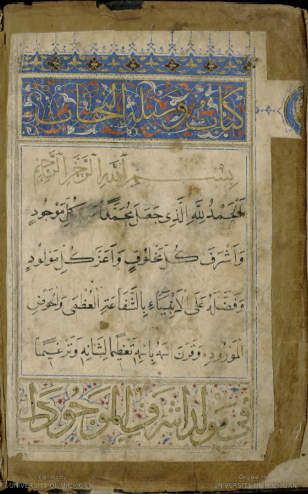
Illuminated title page of Vesîletü’n-necât, University of Michigan Library, Isl. Ms. 412, page 2
Illuminated title panel Kitâb-ı Vesîletü’n-necât. Isl. Ms. 412, p. 2 · University of Michigan Library · Public domain, via HathiTrust. Open in the Reading Desk
Author
Süleyman Çelebi
Work
Vesîletü’n-necât, known as the Mevlid
Composed
812 AH / 1409 CE, Bursa
Form
Mesnevî in rhyming couplets · metre remel
Witnesses here
Univ. of Michigan, Isl. Ms. 412 and 406
LiteratureCoupletsLanguage, rhythm, and address RecitationMawlid gatheringMakam recitation and prayer Arts of the bookManuscriptsCalligraphy, illumination, and marginalia

Literature

Reading the Mawlid

Süleyman Çelebi completed Vesîletü’n-necât in Bursa in 812 AH (1409 CE). The poem recounts the birth of the Prophet Muhammad and episodes from his life. These couplets come from the opening and the lines that date its composition.

Allah adın zikredelim evvelâ
Vâcib oldur cümle işde her kula

Let us first remember God’s name. This is the duty of every servant of God in all that they do.

The verb zikredelim means “let us remember.” It draws readers into the speaker’s invitation. Read the couplet silently, then aloud, and notice how the address changes.

Necla Pekolcay’s study of the poem

Recitation and gathering

Listening to the Mawlid

Listen for the reciter’s pauses at the ends of lines and transitions between melodic modes. At Mawlid gatherings, blessings upon the Prophet and prayers may accompany the recitation.

Kânî Karaca · Vinyl recording

Sections on divine unity, the Prophet’s birth and ascension, followed by a prayer.

Open on YouTube

Odes and the Birth of the Prophet

Hear Kânî Karaca move from an ode to the section on the Prophet’s birth.

Open on YouTube

The Birth of the Prophet

A recitation from the section on the Prophet’s birth.

Open on YouTube

Mawlid Night special programme

A programme recorded on the night commemorating the Prophet’s birth.

Open on YouTube

Nuri Özcan · Mawlid music and recitation traditions

Arts of the book

Exploring the manuscripts

How do calligraphy, decoration, and marginal notes accompany the text? Open the manuscript images at their sources and compare the details.

Isl. Ms. 412

Michigan manuscript

Köksal and Kütük date this manuscript to the early fifteenth century. The copyist left no dated colophon.

Illumination and heading

How does the decorated heading on the opening folios set the title apart from the surrounding text?

View the opening folios

M. Fatih Köksal and Rıfat Kütük, TRT Haber

Ayasofya 3485 · 916 (1510–11)

Ayasofya manuscript

The first and last pages of this Süleymaniye Library manuscript are reproduced in the TDV Encyclopedia of Islam.

Calligraphy and layout

Compare the first two pages with the last. What changes in the line spacing and arrangement of the text?

View manuscript images
Hacı Selim Ağa 1286 · fols. 8a, 9b, 16a

Anthology with makam annotations

On the selected folios of this anthology of song texts, names of melodic modes appear beside the lines.

Marginal notes

Find the makam names beside the main text. How might a reciter have used these notes during a performance?

View images of the anthology

Psychology of religion

Aesthetics and spirituality

What can poetic language, makam recitation, and an encounter with a manuscript tell us about the Mawlid’s enduring appeal? The planned study will use questionnaires and interviews to explore how these three experiences relate to participants’ spiritual lives.

Reading session

Participants will read the Mawlid text and a commentary prepared for the study.

Mawlid gathering

Participants will listen to a makam recitation and observe the rituals of the gathering.

Manuscript session

Participants will examine the manuscripts’ calligraphy, illumination, and layout.

Participant Survey

Mawlid bibliography